
Register and login to use the Lightboxes and Client Area.
There are 0 registered members and 21 guests currently viewing the site.

A password will be e-mailed to you.
- Hello Guest!
- Log In | Register
- Online Members: 0 Guests: 21
There are 0 registered members and 21 guests currently viewing the site.
A password will be e-mailed to you.

|
|||||||||||||||||||||||||||||||
Photo of the Month - exploring the Story behind the Image...
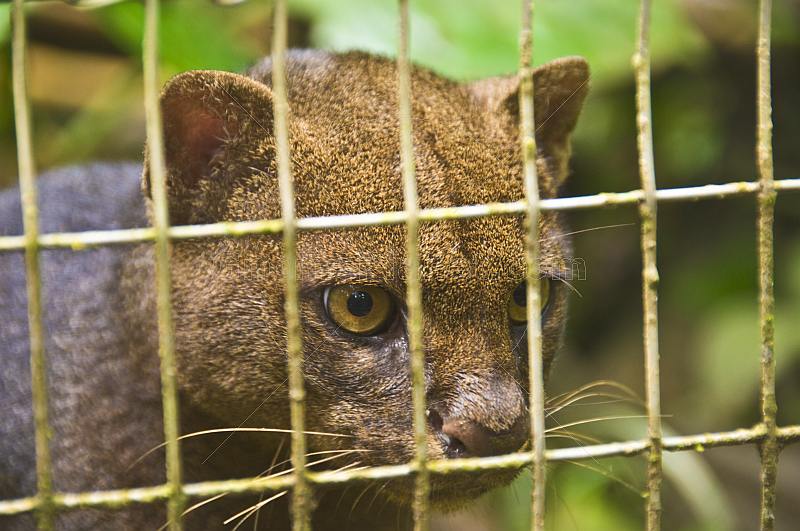
Jaguarundi in AmaZOOnicoYear: 2010, Month: JuneEcuador > Napo > TenaThis month, I've been travelling through the jungle areas of Ecuador. I was staying at a Jungle Lodge near the small town of Tena, and was able to explore the local forest and river. During my time at the lodge, I travelled by river-boat along the Rio Arajuno to visit 'AmaZOOnico', the wildlife rescue centre near Ahuano. I was given a guided tour of the centre, and was able to see the excellent work that is being done there, and visit the wide range of birds and animals that now call the centre their home. One of these is the Jaguarundi that you can see in this 'Photo of the Month'. These animals, a species of wild cat, are very rare and are seldom seen in captivity. In some areas they are listed as an Endangered Species. This specimen, rescued from a previous owner, now lives in its own large compound set in the jungle, and is well looked after by the staff here. I was most impressed with everything that goes on at 'AmaZOOnico', so wanted to share some information with my readers in the hope that the work of 'AmaZOOnico' reaches a wider audience. The text that follows is from their information sheet, and explains the work at 'AmaZOOnico' and their other projects, 'Selva Viva' and 'Liana Lodge', with much greater clarity than I could. AmaZOOnico - Wildlife Rescue CentreAmaZOOnico was started in 1993, and ever since has been receiving wild animals (confiscatd by the Ecuadorian government) which were previously being traded illegally on the black market. Though the trafficking of wildlife is prohibited in Ecuador, as is the keeping of wild animals as pets, people nevertheless buy monkeys, macaws and even ocelots on the black market. After a while the owner discovers that, for example, monkeys defecate everywhere and can not be housebroken. The pet soon loses its novelty and is brought to us. In addition, local hunters may shoot a mother and bring her babies to AmaZOOnico.Most of the animals arrive at AmaZOOnico in bad condition: malnourished, wounded due to being tied up and mostly full of parasites. Approximately one third of the animals die either on their way to the rescue centre or in the first days of living here. Another third can successfully be set free. These are only the adult and healthy animals that are not used to human handling. The remaining third must remain at AmaZOOnico - either living free in the area or in enclosures, thus protecting them from other animals. Selva Viva - Protected ForestOur work is closely connected to other projects. It would not be poissible to release animals into the wild without our protected forest 'Selva Viva' ('living jungle'). Private individuals and a Swiss co-operation dedicated to the protection of rainforests own this primary rainforest, which has now grown to the size of 1,600 hectares. Within Selva Viva, deforestation and hunting in all forms are strictly prohibited. We also work closely with the indigenous community of Ahuano in order to encourage proper eco-management of the existing rainforest. Other projects we are involved with include topics like waste disposal, the effects of the petroleum industry, and agricultural use of pesticides. While working on these projects, we always respect the local opinions and traditions.Liana Lodge - Ecological HotelWe always have more ideas than we have money to accomplish. The addition of Liana Lodge, our ecological hotel, will help fund some of our projects, for example to improve protection for the forest, and for the building of animal enclosures. Liana Lodge is located at the edge of our protected forest. Our objective is to merge nature and indigenous culture thus creating a unique atmosphere for our guests. They live in small cabins with palm-leafed roofs. Each cabin has its own bathroom with hot water and a large terrace with a view of the river. Our restauant combines local and European cuisine. As much as possible we support the local community by hiring indigenous people in the hotel and using local produce in our kitchen. It is anticipated that within five years Liana Lodge will start showing a profit, which will be used to fund our various ecological projects. Our goal is to provide responsible growth and development benefiting humans and the environment.How do we finance the project?Although the government of Ecuador approves of our efforts, we receive no government funding. We only receive private funding through the AmaZOOnico entrance fee, donations, and the selling of local crafts. This income is sufficient for the status quo, but not for growth and expansion. Thanks to the efforts of our volunteers, the costs for running AmaZOOnico are minimal, focussing primarily on food and medicine. For our other projects we rely on donations.We would be grateful if you help us protect the rainforest in whatever way possible. All of your donations are used to protect the rainforest and its inhabitants.
This is Travelling Tim speaking now... What else can you do to help? Tell your friends. Buy a part of the rainforest. Come as a Volunteer. Help them with fundraising in Europe. Wear their teeshirt! They need all hands and heads! |
Stock Photograph SearchAdvanced Search Page
Tag Cloud
all
alma-ata
architect
are
0
argentina
ark
artistic
ashgabat
beijing
bolivia
buddhist
cabinda
canada
car
china
city
creativity
culture
door
doors
end
foz do iguacu
history
horizon
india
kazakhstan
kerala
la paz
land
man
men
military
moskovskaya oblast
museum
nature
nizhny novgorod
one
onguday
outdoor
people
rajasthan
rio
russia asiatic
russia european
salta
semipalatinsk
transport
uniform
use
Popular searches on this site. Latest Photos
Random Photo Worshippers wait in the courtyard of the Ahmet Camii Blue Mosque lit by evening sunshine.. | ||||||||||||||||||||||||||||||
|
Web design by gnomeplanet.com :: All images and pages on this site are © 2008 - 2024 and remain the property of gnomeplanet.com :: All rights reserved | |||||||||||||||||||||||||||||||




 , where you will find contact addresses for Switzerland and Ecuador, account details for donations, and information for Volunteers.


