
Register and login to use the Lightboxes and Client Area.
There are 0 registered members and 15 guests currently viewing the site.

A password will be e-mailed to you.
- Hello Guest!
- Log In | Register
- Online Members: 0 Guests: 15
There are 0 registered members and 15 guests currently viewing the site.
A password will be e-mailed to you.

|
|||||||||||||||||||||||||||
The Importance of Standard Settings for the Travel PhotographerIn the previous article in the 'Tim's Tips' travel photography series, Know and Forget your Camera Equipment, I stressed the importance and the benefits of knowing your camera equipment so well that you could then forget about the mechanics of photography and concentrate on the photograph itself. Along with this knowledge, though, we also need to be sure that the camera operates in a predictable manner. In the daily life of a Freelance Travel Photographer, events occur at a moment's notice, photographs present themselves when we least expect it, and it is thus of vital importance that we can capture the images without mistake. The only way that you can do this, time after time, is to always keep your camera set in a way that you are familiar with. Today's cameras have so many different possibilities, so many different menu settings, that it would be impossible to review them all when we turn the camera on each time. Things are happening so quickly at times that I don't want to think beyond the very basics of photography: shutter speed, depth of field, available light. I need to be able to grab the camera and point it at where the action is, knowing that when I press the shutter release, it will do things in a predictable way. To achieve this, it is necessary to make sure that the camera is always left with the same settings each time. You need to fix on a way of configuring your camera that you are totally familiar with, so that it won't present any surprises. There's nothing more frustrating than grabbing a camera and firing off a sequence of shots at a never-to-be-repeated scene, only to realise that the exposure was set to 3 stops under; the setting you left it with after that last attempt at a sunset sillhouette. We've all done it, of course. Never let this happen to you. Find the settings that you are comfortable with, and stick to them like glue. You will need to change them frequently: that goes without saying, but at least you will always know the starting point. You will know which buttons to press, which wheels to rotate, just how to make the alterations from the standard to the new settings that you need, and you will often be able to do this without even looking at the camera body at all. All of the above will only work, though, if you know the starting point of these adjustments, so when you do make changes during the day, always return them back to standard afterwards. Then the next time you pick up your camera in a hurry, it will be all ready to go, and the shots you capture will be just the way you want them to be - perfectly exposed, and each one a potential seller.
Read other articles in the Tim's Tips series...
|
Stock Photograph SearchAdvanced Search Page
Tag Cloud
0
all
alma-ata
architect
are
argentina
ark
artistic
ashgabat
beijing
bolivia
buddhist
cabinda
canada
car
china
city
creativity
culture
door
doors
end
foz do iguacu
history
horizon
india
kazakhstan
kerala
la paz
land
man
men
military
moskovskaya oblast
museum
nature
nizhny novgorod
one
onguday
outdoor
people
rajasthan
rio
russia asiatic
russia european
salta
semipalatinsk
transport
uniform
use
Popular searches on this site. Latest Photos
Random Photo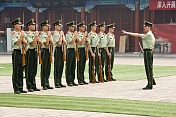 Soldiers with rifles and bayonets on parade in the Forbidden City.. | ||||||||||||||||||||||||||
|
Web design by gnomeplanet.com :: All images and pages on this site are © 2008 - 2024 and remain the property of gnomeplanet.com :: All rights reserved | |||||||||||||||||||||||||||


